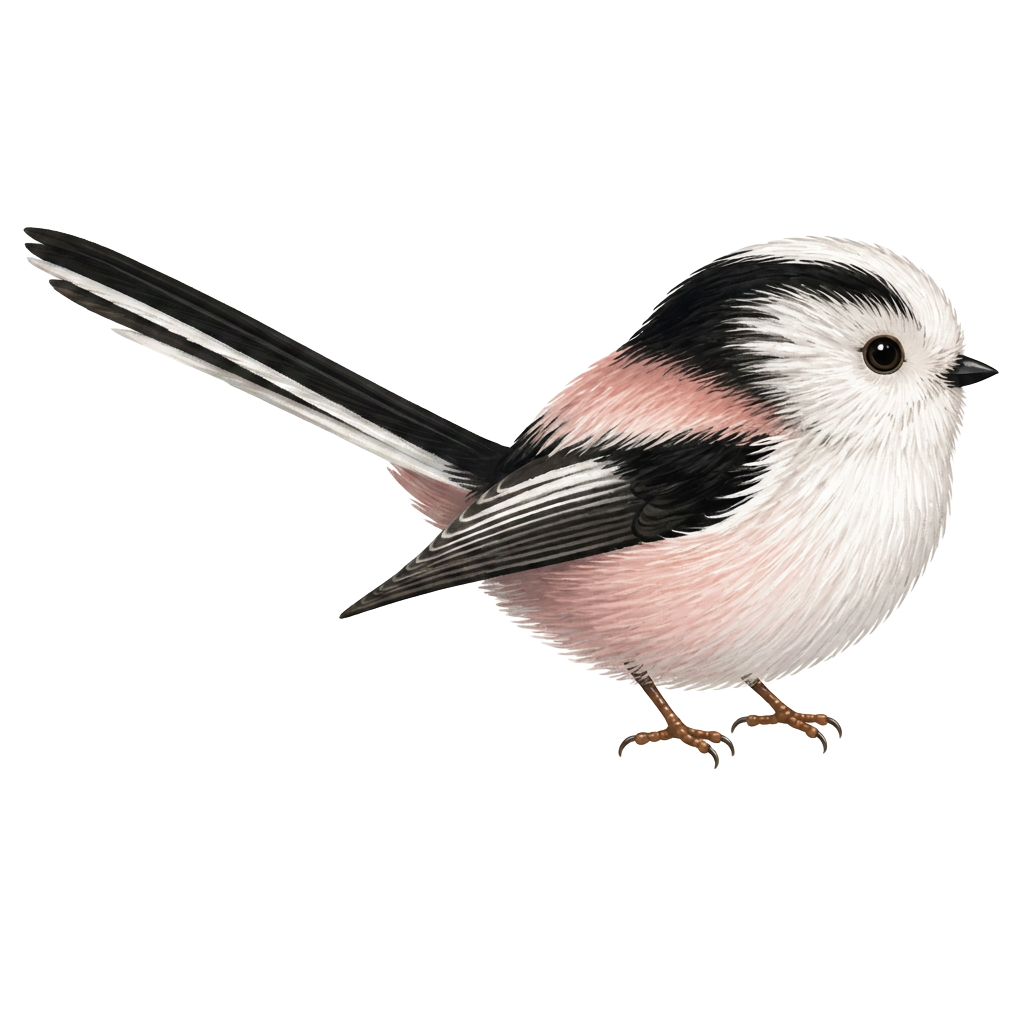
Drowned forests, loud wrens, and spoiler free alt tags
Hello again! Pip here, shaking rain off my wings after a busy week of listening, map-checking, and watching humans argue about avian taxonomy.
Grab a cuppa. Here’s the weeks haps and mishaps..
Belittling the cave dwelling wren
If you follow bird news, you might have seen that the taxonomists have been busy. Someone re-vistited a call made in 1828 ish and decided that the Eurasian Wren should no longer be Troglodytes troglodytes. From now on, it is Nannus troglodytes.
Troglodytes means cave-dweller. Giving a teeny feathered ping-pong ball a fierce name like that TWICE was Linnaeus at his best. Replacing cave-dweller with Nannus - which means "dwarf" - feels far too sensible. A committee decision.
I will grudgingly update my notebook, but I can report that the wren does not read memos. This morning, on a soggy fence post, an unfeasibly tiny bird yelled at ninety decibels. Don’t belittle it.
Spoiler free alt tags - how to describe pictures with secrets?
One of the best puzzles in Dawn Chorus Quest is matching the song you hear to the bird on the screen. But that creates a headache for accessibility.
Standard web guidelines say: describe the photo fully. But if your screen reader reads out "A small brown bird with a cocked-up tail and pale eyebrow, the Eurasian Wren," before you have even guessed, the game is gone.
So we’re trying a two-stage way of describing pictures:
1. The Cameo (before your guess): You get the exact same clues a sighted player gets, and not a word more. Silhouette, posture, broad wash of colour, and how the bird holds itself. No species names. No family giveaways. Just fair clues.
2. The Reveal (after your guess): Once you have listened and made your call, the full picture opens up. The species name, the field marks to look for, and where the photo was taken.
Fair clues for your ears and fair clues for your screen reader. The new level of Ynis-hir has these spoiler free alt tags, and so does Bath. The rest are on the way in the next few weeks ish.
You can also explore our new Accessibility Studio on the website, where you can turn on sound descriptions, calm mode, or larger text whenever you like.
She sings too
For a couple of centuries, old bird books claimed that only male birds sing to defend territories. Out in the field, female birds have been quietly disproving this every day.
We are making sure their voices are celebrated in the game:
The Hen Harrier gliding over the marsh, whistling high to call her mate in for a food pass.
The Blackbird singing gentle, fluting phrases from a quiet roof in London.
The Robin singing sharp, crystal territory songs right through the cold autumn chill.
Song is not a solo act. A bird song guessing game should acknowledge this..
Next stop: Ynys-hir
We are packing our bags and heading to Mid Wales.
English visitors tend to say "un-iss-here". In Welsh, it means the long riverside meadow, tucked right where the River Dyfi meets the salt marshes and Cardigan Bay.
We will travel across seven chapters of valley life:
Walking among ancient pine and birch stumps preserved in peat at the drowned forest of Borth, dating back five thousand years.
Climbing sheep tracks past stone castles and drovers' mills, painted with dramatic skies by J.M.W. Turner.
Watching lead mines come and go, conifer plantations drain the land, and the RSPB step in to block the ditches so the great peat bog of Cors Fochno can remember how to be a bog.
As I like to say when we look out over the estuary: I have watched this valley as forest, farm, mill, and mine. But this is the first century where people fixed it on purpose.
Keep your ears sharp. White-tailed Eagles, Northern Goshawks, and wintering Greenland geese are coming soon to Chorus Quest.